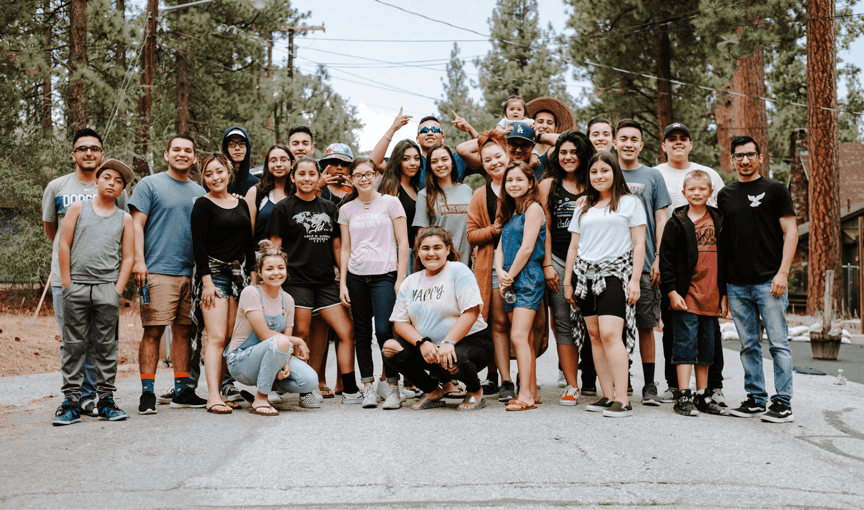


The Football to Eyeball program was created to address three interconnected challenges in rural Bihar.
First, girls from low-income communities face early marriage, limited access to education, and restricted mobility, leaving them with few opportunities for economic independence or leadership.
Second, there is a critical shortage of accessible and affordable eye care services in underserved regions, leading to preventable vision impairment and lost productivity.
Third, there is a disconnect between education and employability—especially for girls—resulting in a lack of pathways from learning to meaningful livelihoods.
Football to Eyeball responds to these challenges through an integrated approach. It uses football as a powerful entry point to build confidence, teamwork, and agency among girls, while shifting community perceptions around gender roles. It then creates a clear, structured pathway into professional optometry training, linking empowerment with employability and healthcare delivery.
This innovation was designed to go beyond awareness and address root causes—by combining life skills, vocational training, and job placement in one continuum. When girls are seen playing football and later serving as trained eye care professionals, it challenges deeply embedded norms and demonstrates new possibilities for their futures.
Ultimately, the program exists to prove that investing in girls can simultaneously transform gender outcomes, strengthen healthcare systems, and create
Football to Eyeball is implemented as a structured, end-to-end pathway that combines sport, education, and livelihood for rural girls.
The program begins with community mobilisation, where underprivileged girls are identified through outreach and a selection process involving tests, interviews, and family counseling. Selected girls are enrolled into a fully supported residential program that provides safe accommodation, meals, and academic support.
Football is used as the entry point—girls undergo regular training with professional coaches, building confidence, teamwork, and leadership while challenging gender norms. Alongside girls demonstrating interest and commitment to transition into a formal skilling pathway, they receive tutoring in core subjects, life skills training, mentorship, and career counseling to strengthen their academic and personal development.
The program then transitions into an accredited optometry education pathway, where girls are enrolled in a 4–5-year course, supported with classroom learning, wet lab training, and on-the-job clinical exposure in hospitals and vision centres.
Throughout the journey, girls gain hands-on experience in patient care, screenings, and surgeries, contributing directly to reducing avoidable blindness.
Upon graduation, girls are placed in jobs within the Akhand Jyoti eye care ecosystem or supported to serve their own communities through vision services.
Since its inception in 2009, Football to Eyeball has grown from a single-community initiative in Bihar to a scalable model linking girls’ empowerment with healthcare livelihoods. The program has already supported over 800 girls, many of whom are now trained optometrists or in advanced stages of professional education. Community engagement has been central to expansion, with increasing acceptance from families and local leaders as girls transition into visible, respected professional roles. This has created a multiplier effect, encouraging more girls to enroll and sustain participation.
The program is now expanding to new districts, with a goal of reaching 1,500 girls by 2030. Its integrated approach—combining sport, gender transformation, and workforce development—positions it as a replicable solution for regions facing both gender inequality and healthcare workforce shortages.
Its spread has been driven through strong partnerships with local health departments, educational institutions like Bihar Health Sciences, and community networks, enabling both grassroots mobilization and access to accredited training and employment pathways. The model is designed for replication: football serves as a low-cost, culturally adaptable entry point, while the skilling pathway is standardized through partnerships with optometry institutes and healthcare providers.
Initially designed as a football-led confidence-building program for girls, we realized that empowerment alone was insufficient without clear livelihood pathways. This led to the integration of a structured skilling component—linking participants to accredited optometry education and employment opportunities.
We have strengthened the model by formalising partnerships with eye care institutions and training providers, ensuring quality clinical training, certification, and job placement. The curriculum has also been refined to include life skills, academic bridging support, and career readiness, improving retention and transition rates.
To implement Football to Eyeball, begin with a need-identification process to understand local challenges related to girls’ education, gender barriers, and access to eye care. The next step is to identify and select underprivileged girls through a rigorous, criteria-based process that prioritizes those from the most disadvantaged backgrounds, with limited social mobility, and at high risk of early marriage. The program specifically targets girls who would otherwise not have access to higher education or employment opportunities.
Once selected, girls and their parents are invited to the campus for orientation and one-on-one counseling to build trust, explain the program, and secure informed parental consent for enrollment.
Participants then enter a structured residential program combining football training (8–10 sessions per week) with academic learning, including English, physics, chemistry, biology, personality development, basic computer skills, and foundational eye care. This is followed by a one-year foundation course and a four-year bachelor's degree in optometry, delivered by trained faculty. Students gain practical exposure through clinical postings, CMEs, and hospital visits and follow a structured yearly curriculum.
After completing the foundation year and Class XII requirements, eligible students qualify for the optometry program through an internal entrance exam. Upon graduation, girls are placed in jobs within hospitals, vision centres, and outreach programs.