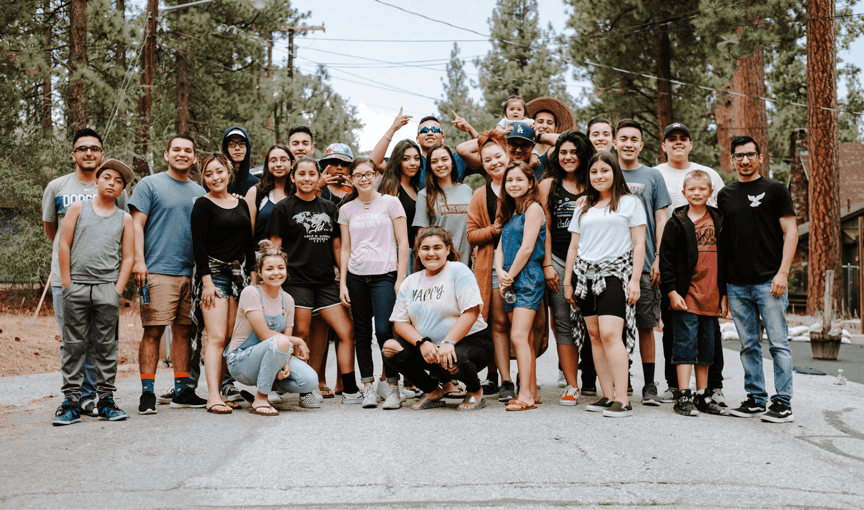


Half of the world’s population is under 30, with over 1.2 billion people aged 15 to 24. Yet, one in five young people globally is not in employment, education or training (NEET). Even among those who are employed, many live in poverty, face inadequate or unsafe working conditions, often in the informal sector or low-skill jobs. Women and individuals from marginalised groups encounter additional barriers and discrimination.
The transition from childhood to adulthood is a critical yet challenging phase, during which many young people lack the necessary support to successfully enter the labour market. Furthermore, there tends to be a mismatch between the competencies taught in school and employers’ requirements, leaving many ill-prepared for the world of work. As a result, young people often turn to precarious, unfulfilling, or even exploitative forms of employment, limiting their opportunities to demonstrate their full potential.
Beyond economic hardship, these conditions can have significant social and psychological consequences, including discouragement, frustration, low self-esteem, or even depression. In turn, this can increase vulnerability to harmful behaviours such as substance abuse, crime, and violence, as well as to poor health and marginalisation.
This innovation was developed in response to the need to better prepare children and young people for the transition into the world of work. It aims to equip them with the skills and confidence to navigate the labour market
Our innovation supports young people along the “learning to earning” continuum, helping them transition into decent employment or self-employment, thereby contributing to their socioeconomic development and improving their living conditions.
In practice, we co-design and implement vocational and entrepreneurship training programmes with local partners, tailored to the needs of youth and labour market realities. The programmes combine technical and vocational skills with entrepreneurship, life skills, and employability competencies.
The programme adopts our sport- and play-based learning approach, which makes training interactive, enhancing the learning outcomes and fostering life skills development that are relevant to the job market such as teamwork, communication, resilience, and problem-solving. We train teachers and coaches to deliver this methodology, and we provide adapted curricula and teaching materials.
Training is often complemented by practical supporting schemes, including mentoring, internships, networking opportunities, and access to start-up funding or business competitions. We also work with partners to address material and infrastructure gaps and to promote inclusive participation, particularly for girls and marginalised groups.
By combining skills development with a supportive ecosystem, the innovation equips young people with the confidence, competencies, and opportunities to enter the labour market, create their own businesses and improve their livelihoods
The innovation has spread through gradual processes of adaptation and replication across diverse contexts. Initially developed as the “Business Knowledge & Vision” programme during a pilot project in Nepal (2012–2015), it has since been continuously refined and contextualised to different countries and target groups.
Its expansion is driven by strong collaboration and partnerships with local implementing partners, ensuring that programmes are embedded in existing institutions and respond to local labour market realities. Swiss Academy for Development works closely with partners to co-design curricula, train trainers, and build local capacity, enabling organisations to take ownership and sustain the activities over time.
Through this partnership model, the innovation has been successfully replicated in multiple regions, including Bangladesh, Colombia, Egypt, India, Myanmar, Nepal, Papua New Guinea, South Sudan, Uganda, and Zimbabwe, reaching nearly 14’000 young people, and training around 260 trainers.
Its scalability is further supported by the use of adaptable teaching materials, a training-of-trainers approach, and a flexible sport- and play-based methodology that can be applied across diverse settings.
The innovation continues to expand sustainably across countries and programmes.
Get in touch with us, we'll be happy to discuss, explore and share ideas. We always welcome opportunities to create new partnerships, disseminate good practices, and further adapt our training content to reach more young people.