
.jpeg)
Foundational learning gaps persist even where school enrolment is high. ICAN–ICAR data show that fewer than 4 in 10 children reach minimum proficiency in reading and mathematics. Traditional schooling and system reforms often struggle with overcrowded classrooms, rigid curricula, and wide learning variation, leaving many children, especially those who are out of school, poor, or with disabilities, invisible. At the same time, communities represent an underused resource, and education systems need cost-effective, systematic, and transformative solutions.
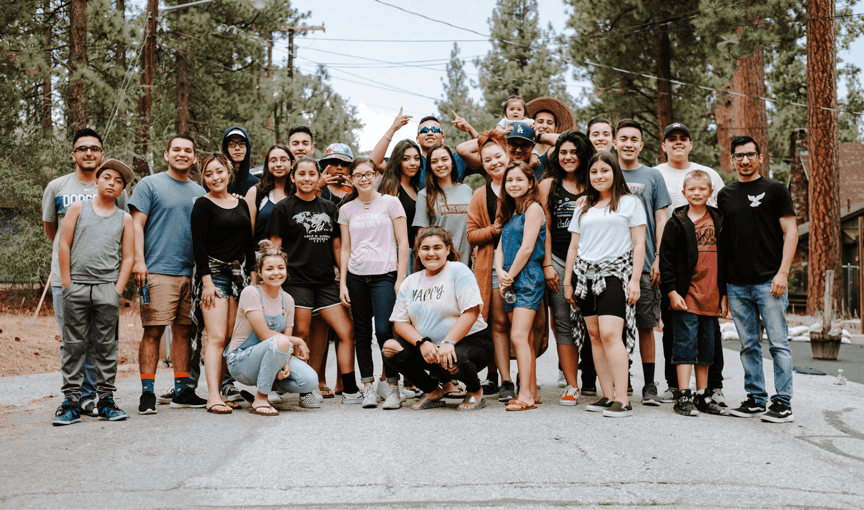
My Village was created to address this dual challenge by combining a citizen-led approach with targeted, evidence-based instruction. It mobilizes parents, youth volunteers, teachers, and local leaders to co-deliver short, intensive learning cycles focused on foundational literacy and numeracy using level-based instruction. This accelerates learning while building shared accountability for outcomes.
The model is intentionally inclusive and adaptive, reaching all children in a village, whether in school or not. Frequent assessment, regrouping, and play-based methods ensure instruction responds to each child’s level and pace. Beyond rapid gains, My Village strengthens local capacity, shifts teacher mindsets, and forges durable links between communities and education authorities, offering a sustainable, cost-effective pathway to equitable foundational learning at scale.
In practice, My Village transforms entire communities into learning ecosystems. Each cycle begins with a village-wide assessment to identify every child’s literacy and numeracy level, whether in school, out of school, or living with a disability. Children are grouped by ability using the Teaching at the Right Level approach and participate in 45-day foundational learning camps held before or after school in classrooms or community spaces.
Local youth volunteers are identified and trained, then paired with teachers to deliver interactive, child-centred, and play-based sessions focused on reading, counting, and problem-solving. Learning progress is reviewed every 10–15 days, and children are regrouped to ensure instruction stays aligned with their current level.
Beyond learning camps, My Village builds sustainable learning ecosystems through community libraries, Social Emotional Learning (SEL) activities for older children, and mobile messages that send weekly literacy and numeracy tasks to parents to reinforce learning at home. Continuous monitoring and reflection support adaptation across cycles. Implemented across Kenya, Tanzania, and Nepal, impact evaluations demonstrate rapid, equitable learning gains and strong community ownership that sustains learning beyond programme cycles.
My Village launched in 2022 across more than 300 villages in Kenya, Nepal, and Tanzania, reaching over 45,000 children and demonstrating the potential of citizen-led, community-driven solutions to close foundational learning gaps, including among out-of-school children. Building on strong impact evidence, Phase 2 (2024) expanded to 35 villages in Tanzania and Nepal, reaching over 7,000 children while refining the model through continuous assessment, data-driven iteration, and close collaboration with government authorities.
The programme’s approach, training local youth volunteers alongside teachers to co-facilitate level-based learning, has proven effective and cost-efficient, generating rapid gains while strengthening local capacity. Its success has attracted government investment: in Tanzania, local authorities funded expansion to 20 additional villages at their own cost.
Currently, Phase 3 is underway in more than 70 villages across Nepal and Tanzania, reflecting growing government ownership and institutional trust. Interest in adopting and scaling My Village is also emerging across the PAL Network, with active engagement and proposal development in Mali, Senegal, Mozambique, Colombia, and Kenya. Supported by PAL Network’s 17 member organizations across 15 countries, My Village is advancing toward its ambition of reaching 1 million children, showing how community-owned, evidence-driven learning ecosystems can scale sustainably while maintaining quality & measurable impact
My Village has evolved through continuous learning. From the start, the programme integrated four core elements: level-based learning camps, community libraries, parent SMS engagement, and SEL activities. What has strengthened over time is the rigour, intentionality, and evidence use of implementation.
Data systems have improved substantially. Assessment tools, SurveyCTO forms, and monitoring protocols were refined to ensure high-quality data, real-time tracking, and rapid use of evidence for regrouping and adaptation. A/B testing is now embedded to compare delivery modalities, supervision approaches, and engagement strategies. Impact evaluations and cost-effectiveness analysis are built in from the design stage, guiding choices upfront.
The KAPB study (Knowledge, Attitudes, Practices, and Beliefs) examined how My Village influences teachers over time. Results showed stronger knowledge of remediation, greater openness to change, and growth mindsets, while also highlighting constraints to sustained practice change. In response, the programme strengthened continuous teacher support, peer learning, and communities of practice.
Gender responsiveness and inclusion have deepened, with equity analysis informing outreach to girls, out-of-school children, and children with disabilities. Learning materials have become more standardised, play-based, and child-centred, while remaining context-driven, aligned with national curricula & local languages, & led by country members.
To try My Village, begin by assessing children’s literacy and numeracy using PAL’s globally benchmarked tools to establish baseline learning levels for all children, including those out of school. Group children by ability rather than age or grade, then run daily one-hour literacy and one-hour numeracy sessions for about 45 days in schools or community spaces.
Conduct midline assessments every 10–15 days to track progress and regroup learners so instruction remains targeted. Identify and train local youth volunteers through an intensive programme and pair them with teachers to co-facilitate sessions, building local capacity and strengthening instructional quality.
Engage parents and community leaders through meetings, community events, and home-based learning tasks (including SMS prompts where feasible) to reinforce learning and foster shared accountability. Monitor implementation using simple tracking tools and reflect on results to adapt delivery.
For access to assessment tools, play-based learning materials, training guidance, and implementation support, contact info@palnetwork.org. This approach enables communities to deliver structured, inclusive, evidence-based, and cost-effective foundational learning programmes that adapt to local contexts and can scale sustainably.