

The work began with one child. In 2002 Markus Gross, professor of computer science at ETH Zurich, started looking for a better way to help his own son, who has dyslexia. The research group that grew out of that question — later the ETH spin-off Dybuster AG, found the same principle applied to mathematics.
Roughly five percent of people have dyscalculia, a neurological difficulty in processing numerical information, and many more children never build secure number sense in early primary. Unlike dyslexia, dyscalculia is barely recognised, so it is identified late or misread as low effort — and the standard response is more practice at the level the child has already failed. What these learners need is close to the opposite: individually paced, multi-sensory repetition that rebuilds number itself.
An ordinary classroom cannot deliver it. A teacher of 25 children cannot re-sequence the progression of number ranges per child, or diagnose which mental representation of number has not yet formed. Parents who want to help have no reliable way to see where their child is stuck, or whether practice is working.
So we set out to take what neuroscience knows about how number sense develops and turn it into 20 minutes a day a six-year-old will actually do, with an adult able to see what is happening. Weak mathematics does not stay in the classroom: it narrows occupational routes and it shapes how children see their own intelligence. That is what we are trying to change.
A child works in short sessions, around 20 minutes, several times a week. The published protocols used at least three to four 20-minute sessions weekly, and that is the dose we recommend.
Each session picks up where the intelligent tutoring system left off. The system holds a model of what this child can and cannot yet do; after every exercise it updates that model and chooses the next task, moving number range and exercise type up or down. A child who is not secure with quantities below 20 does not get hundreds; a child who has that automated is not held there. No adult has to set a level.
Number is presented in several representations rather than as arithmetic to be memorised: as a quantity, a spoken word, a written numeral and a position on a number line, with games that require moving between them. That is what multi-sensory means in practice, and it follows the four-step model of number development (von Aster & Shalev, 2007). The exercises are game-framed, because the volume of repetition has to be tolerable for a six-year-old.
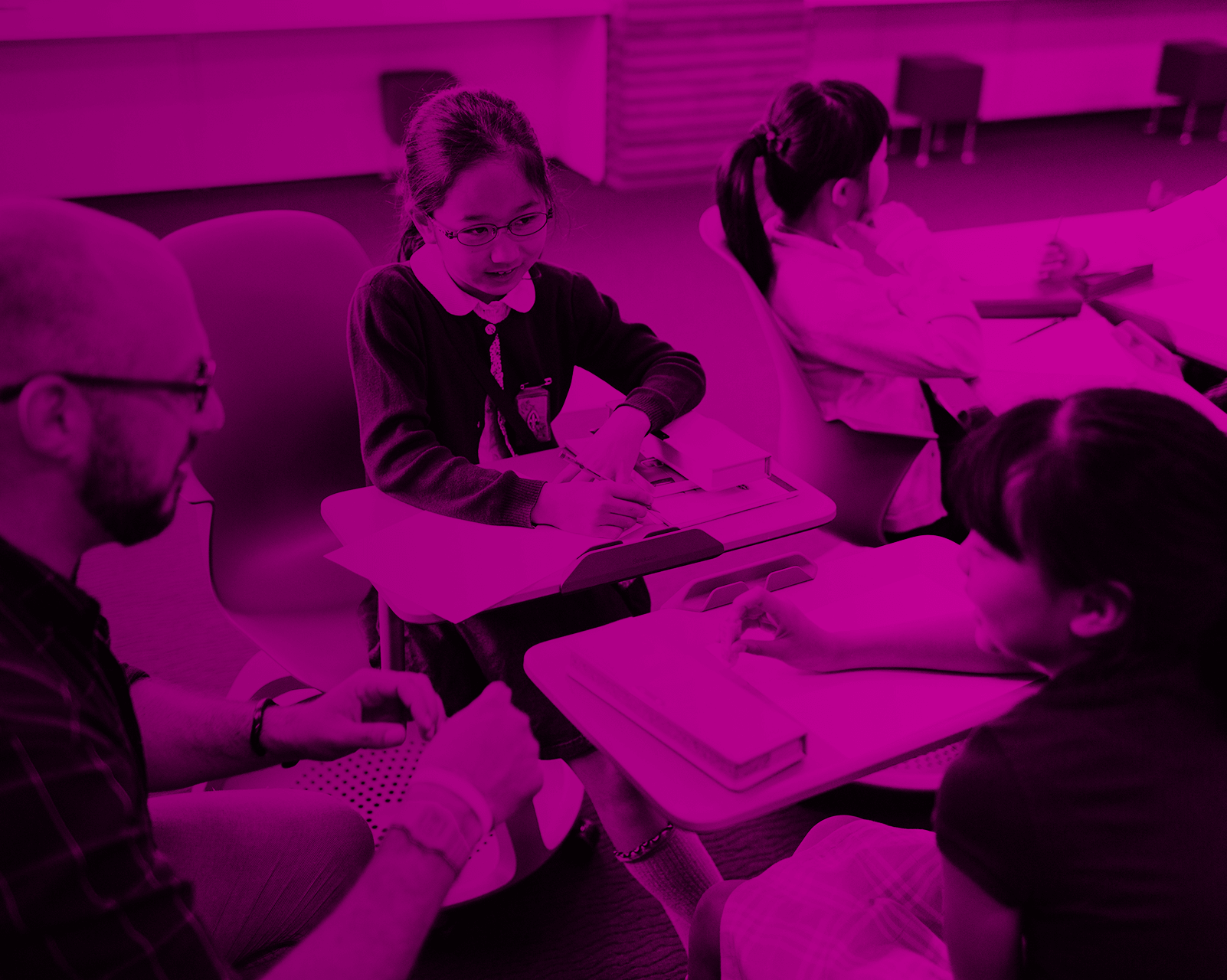
Adults work in the Coach dashboard: per-child progress, where the errors cluster, time on task, plus printable reports and certificates. In a school, a teacher typically assigns Calcularis as the individual practice slot inside the maths lesson or as targeted support; at home, a parent makes it a daily routine. Reading the dashboard needs no specialist training, which is deliberate — the adults using it usually are not specialists.
Calcularis reached families and schools first in Switzerland, through the ETH Zurich spin-off Dybuster AG (2007), and spread largely through the schools, therapists and clinicians who had seen the University of Zurich and Children's Hospital Zurich studies. Evidence, rather than marketing, has been the main channel throughout — the randomised controlled trial published in Frontiers in Psychology in 2020 is still the reason most institutional conversations start.
By the time Constructor acquired Dybuster in October 2021, close to 200,000 children had used the two applications — Calcularis and the spelling programme now sold as Grafari — between them. The programme is available in English, German, French, Italian, Spanish and Dutch, and in use beyond Switzerland in Germany, the United States, Canada, Brazil and India.
Since 2021 it has been distributed as part of Constructor Tech, which reports 2,000+ partners and customers and 2.5M+ users across its platform. That gave Calcularis an institutional school channel it did not have as a standalone Swiss product, alongside the direct parent subscriptions it has always had.
Calcularis reached families and schools first in Switzerland, through the ETH Zurich spin-off Dybuster AG (2007), and spread largely through the schools, therapists and clinicians who had seen the University of Zurich and Children's Hospital Zurich studies. Evidence, rather than marketing, has been the main channel throughout, the randomised controlled trial published in Frontiers in Psychology in 2020 is still the reason most institutional conversations start.
By the time Constructor acquired Dybuster in October 2021, close to 200,000 children had used the two applications, Calcularis and the spelling programme now sold as Grafari, between them. The programme is available in English, German, French, Italian, Spanish and Dutch, and in use beyond Switzerland in Germany, the United States, Canada, Brazil and India.
Since 2021 it has been distributed as part of Constructor Tech, which reports 2,000+ partners and customers and 2.5M+ users across its platform. That gave Calcularis an institutional school channel it did not have as a standalone Swiss product, alongside the direct parent subscriptions it has always had.
Start with the product page: constructor.tech/products/learning/calcularis: age range, the pedagogy, and what the Coach dashboard shows.
If you are a parent: create an account, add a child profile, and let your child run the first sessions unaided. The system needs a few sessions to place the child correctly, so resist intervening when early tasks look too easy — that is the placement working. Open Coach after the first week and look at where the errors cluster rather than at the score.
If you are a school: start with one class or one support group, not a whole-school rollout. Choose the children for whom ordinary maths practice is not working. Give them a fixed 20-minute slot at least three times a week for a full term this is the dose used in the published trials, and sporadic use will not reproduce their results. Have the teacher review Coach weekly, and at the end of the term compare those children's progress against your own records for equivalent children in previous years before deciding whether to widen it.
To talk to us: get in touch through constructor.tech and ask for schools onboarding, which covers account provisioning for classes and a walkthrough of the dashboard.