

We created this innovation because we saw a critical gap between awareness and real behavioral change. Millions of people understand environmental problems, yet existing education systems rarely help children and communities develop sustainable habits, leadership skills, or the ability to solve local challenges together.
As a mother of a child with special needs, the founder also experienced how important inclusive, human-centered, and emotionally engaging learning environments are. This inspired the creation of EcoTechnoMindset — a new approach that combines ecology, technology, entrepreneurship, creativity, and empathy into one system.
Our goal was not simply to educate, but to build a scalable ecosystem that helps people become active changemakers, strengthens communities, and prepares a new generation capable of solving future global challenges through collaboration, innovation, and responsibility.
In practice, Global Green Hub operates as an integrated ecosystem that combines education, technology, sustainability, and behavioral transformation through interactive and scalable experiences.
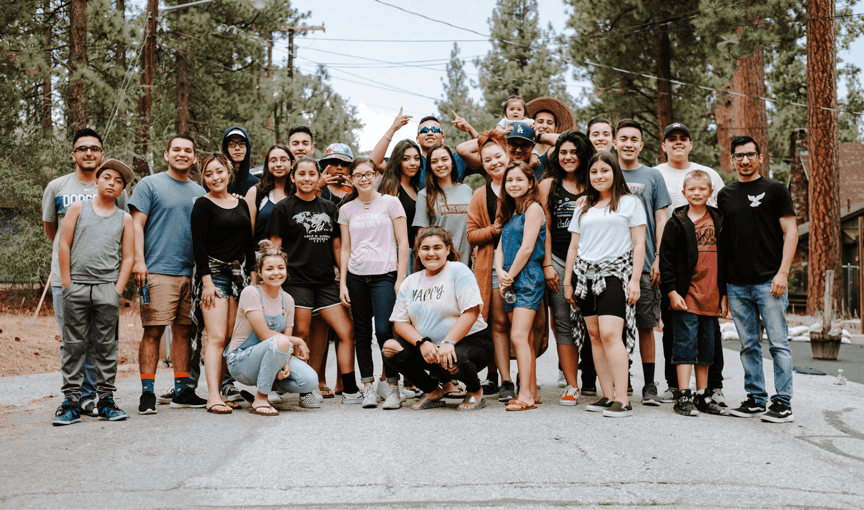
Children and families participate in eco-quests, robotics programs, storytelling activities, and project-based learning where they solve real environmental challenges in their communities. Through the EcoTechnoMindset methodology, participants do not only learn about sustainability — they actively practice sustainable behavior in everyday life.
The innovation includes educational books and characters such as Zara’s Planet, eco-robotics and STEM activities, digital content, community engagement programs, and sustainability-focused workshops. Participants work in teams, develop leadership and entrepreneurial skills, and create practical local solutions related to waste reduction, resource efficiency, and environmental responsibility.
The model is designed as an “ecosystem-in-a-box,” meaning it can be replicated by schools, organizations, and communities in different regions while maintaining the same methodology and impact framework. This allows the innovation to scale internationally while adapting to local cultural and educational contexts.
Global Green Hub spreads through a scalable ecosystem model that combines partnerships, community engagement, educational programs, and digital content.
The innovation is designed as an “ecosystem-in-a-box,” allowing schools, educational institutions, organizations, and local communities to adopt and implement the EcoTechnoMindset methodology in their own environments. This makes replication faster, more affordable, and adaptable across different countries and cultures.
The ecosystem expands through:
partnerships with schools and educational organizations,
community-based eco-events and eco-quests,
digital and social media content,
collaborations with sustainability and ESG-focused partners,
educational products such as books, games, and learning programs.
The methodology also spreads organically through participants themselves. Children and families become ambassadors of sustainable behavior within their schools, homes, and communities, creating long-term behavioral and cultural change.
By combining intellectual property, storytelling, education, and technology, the model creates both local engagement and global scalability.
Global Green Hub has continuously evolved from a small educational initiative into a multi-layered ecosystem focused on behavioral transformation, sustainability, and innovation.
Initially, the project focused mainly on environmental education for children. Over time, we realized that awareness alone was not enough to create lasting change. As a result, we developed and integrated the proprietary EcoTechnoMindset methodology, combining sustainability, technology, entrepreneurship, psychology, and systems thinking into a single framework.
We expanded the innovation by adding:
eco-quests and gamified learning experiences,
robotics and STEM programs connected to environmental challenges,
storytelling and educational characters such as Zara’s Planet,
community-based activities involving families and local stakeholders,
digital and scalable formats that support broader implementation.
We also adapted the model to become more inclusive, collaborative, and practical, ensuring that participants not only learn concepts but apply them to real-life local problems.
Today, the innovation functions as a scalable “ecosystem-in-a-box” that can be implemented across different educational, cultural, and social contexts while maintaining consistent impact and methodology.
To try Global Green Hub, individuals or organizations can start by joining one of our educational or community-based programs, such as eco-quests, sustainability workshops, or EcoTechnoMindset learning activities.
Schools, educational centers, and community organizations can implement the “ecosystem-in-a-box” model, which provides access to our methodology, educational content, interactive activities, and practical tools for behavioral transformation and sustainability education.
Participants begin with simple, engaging experiences that combine storytelling, teamwork, technology, and real-world environmental problem solving. Through these activities, they gradually develop sustainable habits, leadership skills, and the ability to create local impact.
Organizations interested in collaboration can partner with Global Green Hub to adapt the model to their local context, integrate it into educational programs, or co-develop community initiatives focused on sustainability and innovation.