
.png)
Our organisation believes that culture shifts from Wonderment to Awareness to Action to Habit, and from self to society. Sustainability cannot remain an idea people agree with; it must become a way of being. This belief led us to design a program rooted in the self-transformation of teachers. First, the values and habits formed early in life shape a child’s worldview, and educators play a powerful role in that journey. If sustainability is to become natural and lived, it must be embodied by those who guide young minds. Second, if teachers themselves do not experience reflection, collaboration, and shared ownership, they cannot nurture these qualities in students. The shift has to begin within. Third, through our work with nationally recognised Green Schools Programs, we observed that many climate initiatives created awareness but were built around competition and rankings. Sustainability became something to achieve, not something to practice collectively. Fourth, in a world already working in silos, we needed a design that brings together diverse ages, professions, and geographies to strengthen collective responsibility. We created this innovation to move from competition to cooperation, from isolated action to community action, and from short-term projects to lived, shared practice within schools and beyond.
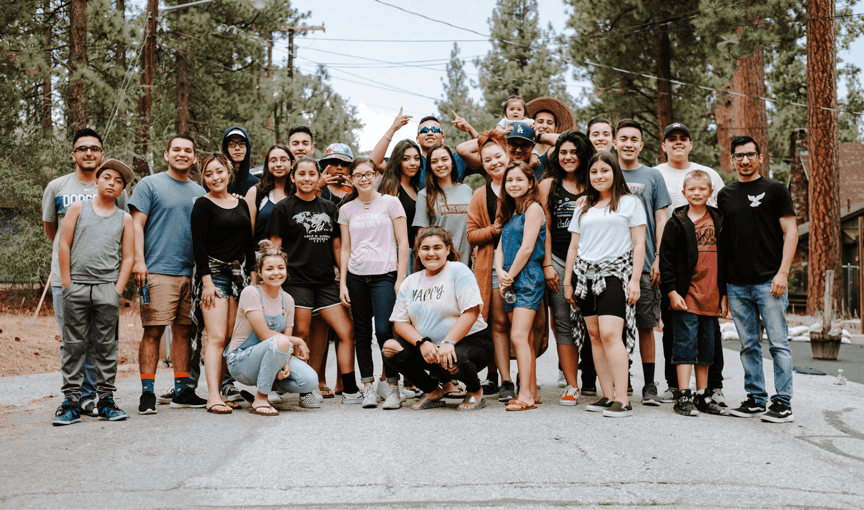
Our innovation unfolds as a journey of transformation and connection. It begins by identifying climate passionate educators from different districts of Himachal. Each educator works closely with three interconnected community circles. The first is a core team of four- Youth Collaborators from universities, Corporate Collaborators with project management experience, and Peer Collaborators from previous cohorts who offer contextual guidance. The second circle is the larger community of all educators and collaborators. The third circle is the educator’s ecosystem: students, school, families, panchayats and local communities.
An educator journeys through the above three circles, unfolding in phases. The first phase focuses on self-reflection using tools like IKIGAI. Mentored by technical experts, they refine and finalise their Sustainability Project along with the core team. Next phase focuses on action and collaboration. Educators execute their projects by forming community partnerships. They are supported by their core team and the whole Satat community. They meet regularly for dialogue, connected reflections and shared problem-solving. Final phase focuses on communication. Educators articulate their Theory of Change & share their learnings with the entire community & all stakeholders. These sessions are attended by relevant government officials, creating opportunities for collaboration and recognition. Educators emerge as sustainability leaders rooted in collective action.
Satat Shikshak Samudaya has spread through depth, trust and visible action. We began in 2023 with 14 educators from 6 districts of Himachal Pradesh. In 2024, we grew to 21 educators across 9 districts. In 2025, 15 more joined from 7 districts. In 2026, we launched our fourth cohort with 15 new educators. Today, 65 educators across 12 districts are leading 50+ Sustainability Action Projects, supported by 126 core community members. Our collaborators extend beyond Himachal. Youth and project collaborators come from cities such as Delhi, Mumbai, Bangalore and Ahmedabad, and also from countries including Finland, Indonesia, the USA and the UAE. This cross-geographical exchange strengthens local action with diverse perspectives. On the ground, over 6,500 people across 30+ villages have been reached through assemblies, rallies, plantation and composting drives. More than 3,000 community members are actively involved, supported by 200+ partnerships with panchayats, schools and local authorities. The impact is tangible: 333 kg of waste collected, 155 kg compost generated, 2,350+ plants planted, 6 water bodies cleaned, and 160+ traditional plant species documented. What sustains this growth is ownership and diversity, a voluntary, lifelong community growing educator by educator, district by district.
In our first year, the program lead also stepped in as the sole youth collaborator for all 14 educators. With no previous cohorts and limited reach, the priority was simply to hold the space and ensure the pilot survived.
In 2024, as we grew to 21 educators, it became clear that one person could not meaningfully support everyone. We expanded by inviting university students from beyond Himachal Pradesh. This brought fresh urban perspectives into dialogue with rural and semi-urban realities, creating a powerful two-way exchange. Educators gained new ideas and confidence, while youth collaborators developed a grounded understanding. We also invited teachers from Cohort 1 to mentor Cohort 2, making support more contextual and relatable. By the third year, we recognised that peers should not pause their own Sustainability Action Projects while mentoring others. As a lifelong community, not just a nine-month program, we encouraged them to continue leading their initiatives. Active projects doubled, with new cohort projects alongside continuing peer projects, strengthening continuity and ownership. Our roles have evolved beyond program management. We embody the forest-like values we speak of: interdependence, care, and practice. We do not just talk about sustainability; we live it. Our consistency between values and action inspires the community, and that mutual inspiration is what allows this platform to thrive.
If you would like to try this innovation, start by bringing together a small group of committed individuals who care about sustainability in their own context. They could be educators, but they could just as easily be farmers, entrepreneurs, doctors or professionals from any industry. The model is about people and community, not just schools. Begin with reflection before action. Create safe spaces for participants to explore their relationship with nature, their purpose and the sustainability challenges around them. Then guide each person to identify one real, local issue they feel responsible for addressing. Build small, diverse support teams around them. Include youth, experienced professionals and peers who can offer different perspectives and practical guidance. Provide a simple project framework with milestones and regular check-ins to maintain momentum. Encourage collaboration instead of competition. Keep participation voluntary and ownership-driven. Over time, connect these individuals into a larger community where they continue learning from and supporting one another. The framework can be adapted to any geography or sector. What matters most is nurturing leaders who act locally while feeling supported by a shared, lifelong community.