
The Teacher Support Hub (ÖDA) was created in 2024 to address a critical gap in Türkiye's post-disaster education response: the absence of permanent, participatory spaces where teachers — central to recovery yet themselves living the disaster — could heal, connect, and grow professionally. Conventional responses — short-term trainings, one-off workshops, top-down programs — treat teachers' recovery as deliverable in a single intervention, forgetting that genuine renewal unfolds through refuge, community, and time.
Teachers themselves made the need visible. In southern Türkiye, a regional group within Teachers' Network had been meeting since 2019, building peer learning through shared practice. When the February 6, 2023 earthquakes struck, this same group mobilized within hours — coordinating relief, psychosocial support, and solidarity across affected provinces. Their work surfaced what no external assessment could: in a region where 45.4% of classrooms became unusable and 4,525 newly appointed teachers arrived into container shelters and isolation, teachers needed a permanent place to gather, heal, and keep going. Listening to this teacher-named need, Teachers' Network initiated ÖDA in Hatay — a space, in their own words, for healing.
ÖDA is not a new response invented for the earthquake. It is what Teachers' Network has been building since 2016 — teachers as changemakers, learning and acting together — taking root where it was needed most.
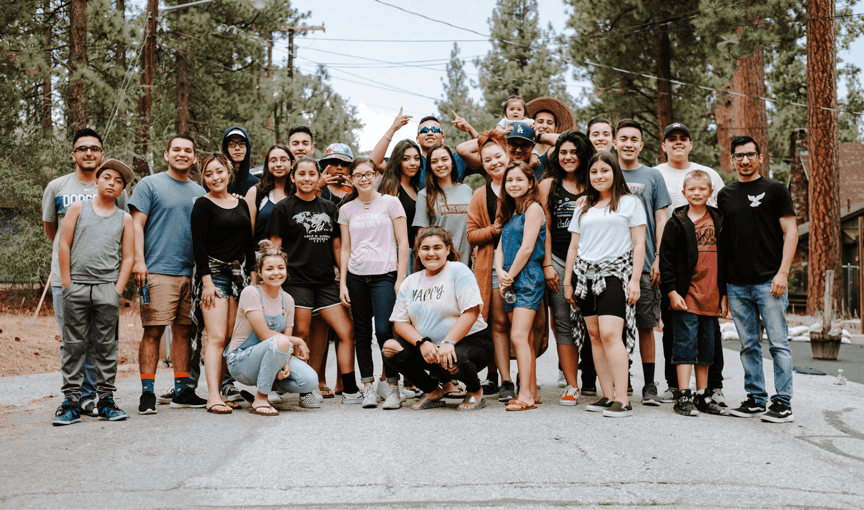
The Teachers Support Hub is a dedicated place in Hatay — a prefabricated building with two containers — where teachers, academics, and civil society meet three to four times a week. Since January 2024, ÖDA has convened 220+ activities, with 1,101 teachers across 3,505 engagements. Most activities run as ongoing series, not one-off sessions: this continuity lets teachers apply new practices in their classrooms and return to ÖDA for peer feedback.
ÖDA is a space that puts teachers first — supporting them to develop their own solutions to their needs and contributing to their wellbeing. Its activities and the content that nourish teachers take shape from what teachers ask for and run through their own coordination. Two roles enable this. A small professional Facilitator Team holds the network together — supporting teachers, convening partners across Türkiye, and channeling resources where momentum builds. A Coordination Team of 10–15 volunteer teachers shapes ÖDA's program, meeting monthly to review feedback and surface emerging needs.
ÖDA's programming combines three formats. One-off events — talks and experience-sharing circles, in person and online — open the space wider. Year-long peer-led groups (book discussions, volleyball, trekking) and expert-led workshops (classroom storytelling, child abuse awareness) sustain ongoing community. Multi-week programs in design and critical thinking offer deeper learning through interactive training and mentorship.
The ÖDA model spreads through deepening and adaptation, not replication of a fixed template.
First, deeper root in Hatay. Since January 2024, ÖDA has brought teachers together across 220+ activities, generating 3,505 engagements from 1,101 unique participants to date, alongside 52 stakeholders from NGOs, academia, and CSR partners. A core of 249 teachers (24%) returned for three or more activities, generating 73% of all engagements — evidence that ÖDA fosters sustained participation rather than one-off contact, with indirect impact reaching roughly 30,000 students.
Second, outward beyond Hatay: teachers themselves design and lead online experience-sharing circles and expert exchanges, reaching colleagues across Türkiye who cannot reach the physical space.
Third, into other institutions: partners adapt ÖDA's approaches into their own programs.
In the next 2–3 years, we aim to turn ÖDA's core insight — that what heals teachers after a disaster is what could have prepared them for it — into a teacher-led disaster resilience model. Hatay's teachers, drawing on what they have lived through and learned, want to share this experience with colleagues in other fragile contexts.
ÖDA has evolved through continuous teacher feedback, with each change deepening — not redirecting — its founding commitment to participatory, community-based, and sustained practice. Two modifications stand out.
In ÖDA's early months, activities ran mainly on weekdays through partner-led workshops. Teachers arriving after long school days described feeling exhausted; some asked for sessions where they could rest and connect. Most activities shifted to weekends, with movement, music, and reading groups joining content workshops. Attendance and depth grew — ÖDA more fully met its commitment to teachers as whole persons.
Second, partnerships have grown from one-off collaborations toward sustained co-creation. Partner organizations initially arrived with their existing program designs; over time, they began shaping content together with the Coordination Team, adapting their approach to teacher-named needs.
Start by exploring the Teachers' Network website [https://www.ogretmenagi.org/] — a decade of teacher-led practices, podcasts, and publications. Most content is in Turkish, but AI translation makes it accessible. These materials show how Türkiye's teachers built an ecosystem of solidarity, peer learning, and cross-sector collaboration — the ground from which ÖDA emerged.
Five principles matter most. First, listen for the real need teachers themselves name. After the earthquakes, teachers in Hatay did not ask for short-term training; they asked for a permanent place where they could keep going. But the principle is broader: respond to what teachers actually ask for, in the form their context requires — a space that puts them first. Second, gather a small voluntary Coordination Team of teachers to shape and run the program, and invite partners (NGOs, academics, public institutions) as equals. Third, shape activities and content with teachers as ongoing series that nourish them — making recovery the same practice as preparing for what comes next. Fourth, build a small Facilitator Team whose stance is "with teachers, not on behalf of teachers." Fifth, build continuous feedback so the program evolves with the community.
The model welcomes all scales and travels into other fragile contexts. Contact Teachers' Network at info@ogretmenagi.org.