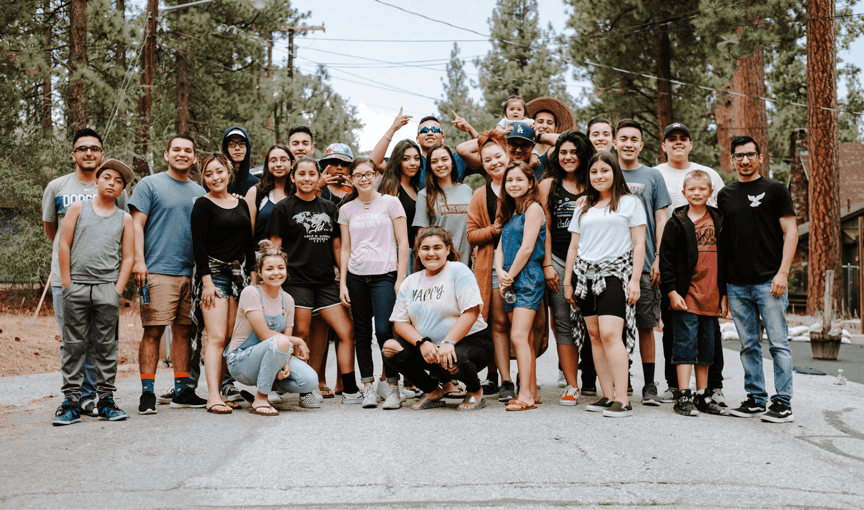


The Healthy Planet Way emerged from a growing dissonance in learning. While education systems have become more structured and outcome-driven, the experience of learning itself has become increasingly fragmented and disconnected. Children spend more time in formal settings, yet feel less anchored to the people and contexts that give learning meaning.
We began exploring this within our early childhood classrooms, where we first implemented this approach. The difference was clear: children who felt deeply connected, to their teachers, peers, and families, were more confident, curious, and resilient. Their learning was not just stronger, it was more meaningful. This led us to question why relationships are treated as a backdrop, rather than the core architecture of learning.
At the same time, we saw a wider shift towards isolation, accelerated by urbanisation and digital living, weakening intergenerational bonds and everyday opportunities for connection.
The Healthy Planet Way was created as a response. Developed through the Learning Lab and grounded in early childhood practice, it reimagines education as a relational ecosystem where belonging is intentionally designed and families are co-educators.
Having seen its impact in the early years, we are now extending this approach into higher grades, carrying forward the same commitment to connection and human flourishing across the full span of schooling.
In practice, the Healthy Planet Way translates connection into the daily design of school life. Classrooms function as relational ecosystems where belonging is intentionally built through routines, rituals, and interactions. Learning extends beyond the child teacher dynamic to include families, grandparents, and the wider community as active co educators.
This is guided by our Magic 8 values, Belonging, Relationships, Agency, Identity, Empathy, Curiosity, Resilience, and Leadership, which act as commitments to the counterculture we are building. These are not taught as abstract ideas, but lived through everyday experiences such as circle time, collaborative projects, community engagements, and dialogue.
Each value is brought to life through designed experiences like Planet Plate, Wisdom Wonders, Festival of Learning, the Library and Imagination Studio, Planeteers, and thoughtfully designed physical and co working spaces. These ensure that connection is not occasional, but continuous.
Teachers act as designers of these relational environments, prioritising connection before content, while inquiry based learning builds curiosity and agency. The Learning Lab continuously studies and refines these practices, ensuring they remain research informed and contextually relevant.
The result is a learning environment that feels more like a community than an institution, where children develop identity, empathy, and resilience through meaningful participation in a connected world.
The Healthy Planet Way has spread organically through a combination of practice, research, and community engagement. What began within our classrooms has steadily grown into a model that educators seek to experience firsthand. Over the past two years, we have hosted educators, school leaders, and researchers from over 397 schools who have visited to observe the approach in action.
Through the Learning Lab, we actively share our frameworks, curriculum approaches, and research findings through conferences, workshops, and publications. Platforms such as the Festival of Learning and UnscripTED have created spaces for dialogue, enabling the model to travel beyond our setting and contribute to wider educational conversations.
Importantly, the Healthy Planet Way is designed to be adaptable rather than prescriptive. Schools engaging with the model are not expected to replicate it, but to reinterpret its core principles within their own contexts. Early adoption has been particularly visible in intergenerational learning and relationship first practices.
This open approach reflects a core belief that meaningful innovation in education must be shared rather than protected. By making our work visible and accessible, we aim to contribute to a broader shift in how learning communities are imagined and experienced.
The Healthy Planet Way has evolved continuously through cycles of reflection, research, and practice. Early iterations revealed that while families were engaged, much of this engagement remained surface level and event driven.
In response, we redesigned this aspect of the model, shifting from participation to partnership. Families and grandparents are now embedded as co educators in everyday school life. This is reflected in initiatives such as Wisdom Wonders, where grandparents engage regularly in learning experiences, Planet Plate as a shared community ritual, and our co working space that brings parents into the daily rhythm of the school. A powerful example of this shift is parents collaboratively enacting plays based on children’s favourite books, taking ownership of set design, costumes, and sound as co creators in the learning process.
The Learning Lab plays a critical role in this evolution, studying what works in our context and adapting global practices to local realities. This has led to deeper integration of intergenerational learning, more intentional design of routines and rituals, and stronger alignment between values and practice.
Rather than a fixed framework, the Healthy Planet Way is a living system, evolving alongside the children, families, and communities it serves.
To begin implementing the Healthy Planet Way, schools do not need to redesign everything. The shift begins by moving from instruction to relationships, and from school readiness to life readiness.
We can start with partnerships. Reimagine families and grandparents not as visitors, but as co educators. Simple practices such as family story circles, intergenerational reading mornings, or inviting elders into classrooms can begin to reshape the learning environment.
Attempt to transform what already exists. Use assemblies as spaces for children’s voice, create community rituals such as shared meals or storytelling, and invite families to co design learning experiences.
Within classrooms, prioritise relationship first practices such as dialogue, observation, and emotional connection alongside academic learning. Build consistency through shared values such as the Magic 8, rooting social and emotional development in real relationships across ages.
Perhaps what is most important is that schools adopt a reflective, inquiry led approach which starts small, stay consistent, and allow the model to grow over time. The goal is not to replicate a programme, but to cultivate a mindset where belonging shapes becoming and communities grow together.